
Okay, so this is just a quick article focusing on sustainable festival fashion.
We were looking online to see what suppliers there were and realized there is a huge gap in information. So if you are looking for festival fashion that is both sustainable and actually looks great, then continue reading.
Table of Contents
A brief introduction to sustainable festival fashion.
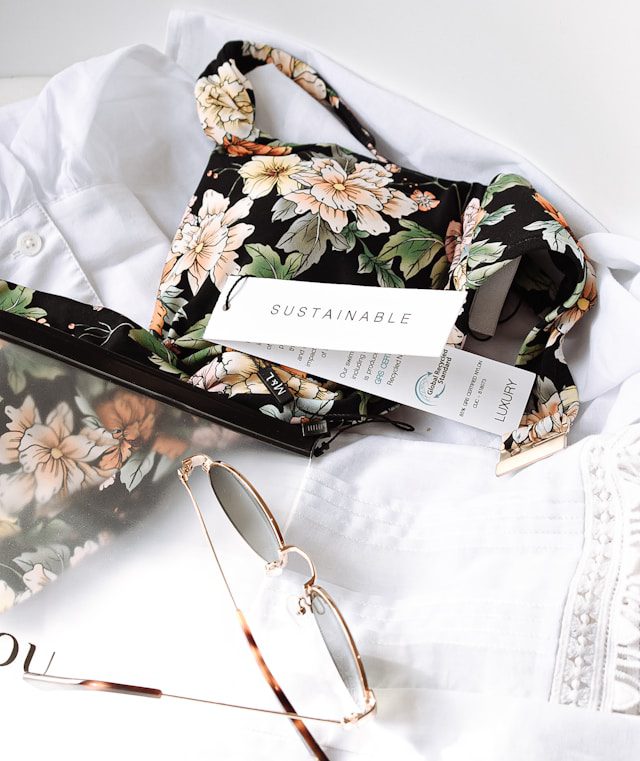
Despite what you would think from the online picture on this, sustainable festival fashion goes back a long way. Most of the articles online will focus on specific stores and products. This often includes mad shipping for very expensive items that are offering a ‘green premium’ for their product.
It’s quite overwhelming to be honest, and although we will feature a few companies that are making great strides in this regard, it’s worth noting all the options that are available in your local community.
Sustainable Materials to Look Out For
Recycled and Organic Cotton
Conventional cotton production relies heavily on pesticides and water. Organic cotton avoids synthetic chemicals through natural farming methods, while recycled cotton uses post-consumer or post-industrial waste to reduce landfill buildup and resource use. We didnt actually know this ourselves and will consider it moving forward.
Organic Hemp
Hemp is a durable fiber that requires minimal water and no pesticides. It’s naturally soil-enriching and creates breathable, long-lasting fabrics that soften over time—ideal for multi-day outdoor events.
Organic Linen
Derived from flax plants, linen uses minimal water, grows in low-quality soil and generates little waste. It’s biodegradable, naturally moisture-resistant, and suitable for hot weather.
Recycled Polyester
Made from repurposed plastic like bottles, recycled polyester cuts down on landfill waste and emissions. It’s commonly used in activewear, making it a practical addition to any sustainable festival fashion lineup. There is a lot of green washing arounf this material also so be sure to check online before purchasing.
Tencel (Lyocell)
Produced from wood pulp through a closed-loop process, Tencel uses less water and reuses solvents to reduce waste. It’s breathable and absorbent, offering a soft, comfortable alternative to synthetic fibers.
Piñatex
A leather alternative made from pineapple leaf fibers, Piñatex is biodegradable and cruelty-free. It reduces agricultural waste and offers a plant-based option for accessories and outerwear.
Econyl
This regenerated nylon is made from discarded fishing nets, industrial plastic and textile waste. It’s reprocessed into high-quality yarn, offering a low-waste, closed-loop alternative to traditional nylon.
Qmonos
Developed using spider silk protein and microbes (no actual spiders), Qmonos is biodegradable, strong, and flexible. It represents a next-generation material for ethical and durable design.
Each of these materials plays a key role in advancing sustainable festival fashion, helping consumers and brands alike reduce their environmental footprint.
Original guide by Bamboo Rose: Top 8 Sustainable Fashion Materials for Clothing Brands
Our experience with festival gear at Primavera Porto 2025
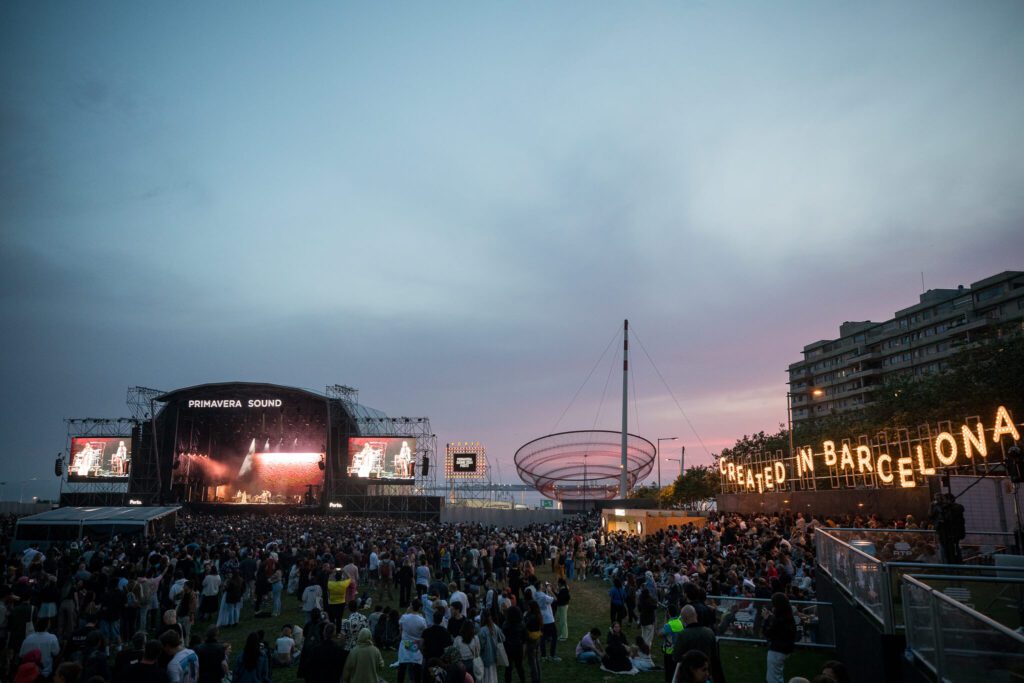
Recently, Halftone Magazine visited Primavera Porto 2025.
It’s worth reminding yourself that new items aren’t always needed for festivals in the first place. Of course if you are facing extreme temperatures such as during winter festivals then dress appropriately.
We really couldn’t be bothered with big suitcases and instead opted for a change of clothes for each day with a coat in case it rained.

This worked fine. We still made specific merch purchases before but generally the clothes you normally wear to gigs and concerts can be used for your festival attire. Moreover, damaged, old and second hand clothes are perfect for the muddier, worse weather that can be seen at camping festivals.
Look at any photos of vintage woodstock right up to 90s Glastonbury images or old Reading and Leeds Fest shots, and you will see scores and scores of people dressing chill, normal and most likely packing light in clothes but heavy in drinks.
Options for second hand festival fashion, clothing and outfits.
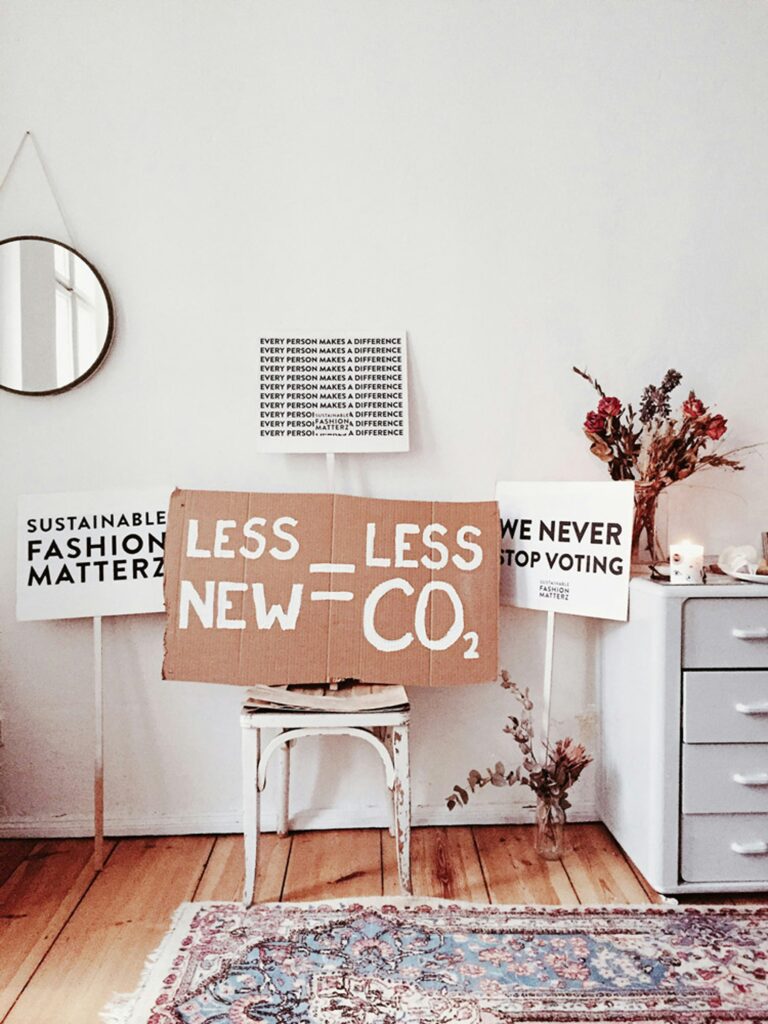
Your first stop should always be local charity shops, local boutiques, vintage stores, thrifts stores, markets and whateveer you can find near you if at all possible. When you are out in the middle of the fields, you aren’t exactly going to find some Donegal Tweed Store but some events do lent themselves to sustainable shopping, purchasing and actions.
Increasingly, festivals like Love Tomorrow are ensuring sustainable industries are featured and present throughout. Tomorrowland itself has tried a lot of inititaves for sustainability. Despite this they did run into an issue with their cups at the 2025 festival.
Brussels based locations for festival gear.
We have actually created a great guide to vintage shops, thrift stores, charity shops and similar in Brussels which should serve as a decent guide to find some decent festival gear in Brussels. To make things easier, we’ve listed some locations, links and directions below to help you find your festival gear.
Vintage Seventies: Address: Rue Haute 244, 1000 Brussels
Boutique Jipex various locations – 2 recently closed in Ixelles and Etterbeek as of July 2025.
Jat Vintage: Address: Chau. de Wavre 139, 1050 Ixelles
Les Petits Riens: Address: Rue Haute 188 – 1000 Bruxelles (see more existing locations)
Gabriele Vintage: Address: No fixed address (pop-up stores, events…)
Brussels Vintage Market: Address: Rue de Ligne 8, 1000 Bruxelles
Markets
There are various markets near most festivals, but especially so in Europe. With fesitvals often taking place in City Centres, it leaves ticket holders to explore the local surroundings, scenery and of course markets! So next time you are hitting Berlin, Dublin, Barcelona or Brussels for festivals, make sure to look at the local markets for some sustainable secondhand festival fashion.
Brussels’ Flea Market: Address: Place du jeu de balle
Stores
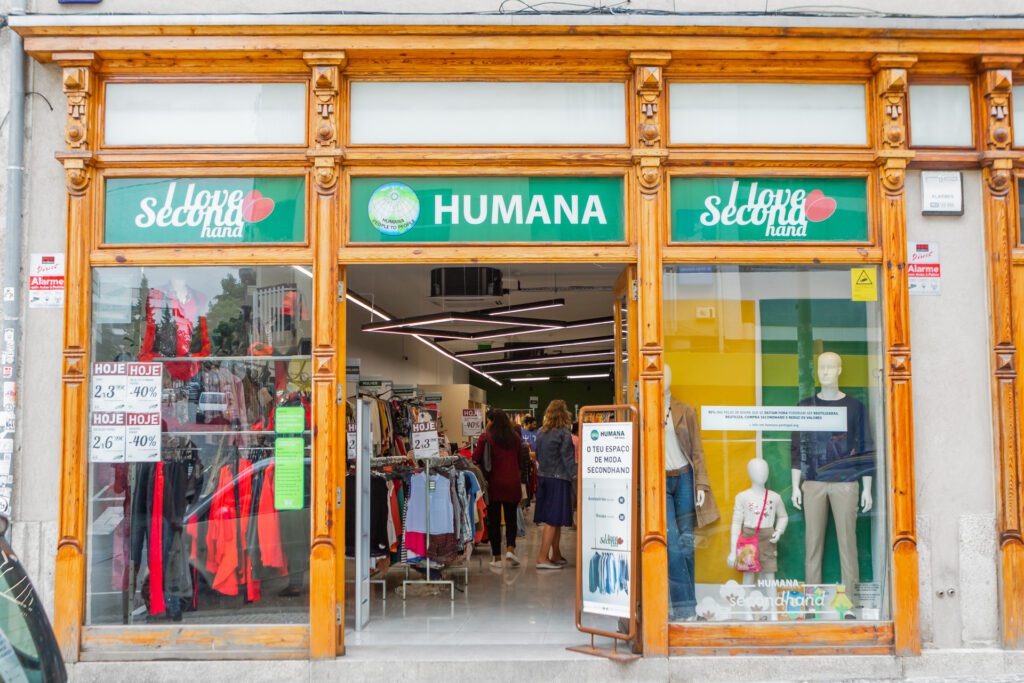
There are always stores in the city of the festival or your hometown that offer some sustainable choices. Shop before the festival to avoid unnecessary purchases on one wear items. Shop during the festival where possible. Local Stores Near the Festival. Maybe you are starting to see a theme. Shopping local during fesitvals or before really is ideal. We picked up some great deals from Porto’s Humana stores, for example.
Do some planning before the festival and find some local stores that sell the types of items you are likely to need. Explore your map app, look in newspapers and journals for local creatives. Finding a personal connection to the items you purchase is more than worth the effort.
Online
If you live in Belgium, try looking for eco cheque suppliers of waterproof coats, tents, durable festival clothing and more. Most providers such as Pluxee offer online purchases as well as in person. This is a quick and relatively affordable way to get local festival fashion without having to worry about crazy shipping distances, co2 and more sustainable delivery issues.
Vinted, Depop and the likes are also decent, especially when doing local pickup or local orders from your city. There are a lot of pre-loved items, secondhand gems and pieces that could.
Minimalism? There are plenty of options for most festivals.
Merch
Not everyone is a merch buyer. It’s a great way to support artists and can double over as a practical way to add or remove layers while at a festival. Primavera Porto for example offered plenty of stalls selling band and artist merch. From Charli XCX to Fontaines D.C. there was just so much on offer.
Instead of that polyester cool tech 100 euro purchase from halfway across the world, plan ahead and just seek out a cool t-shirt on the day of the event for 20 – 30 euro.
Not all merch is created equally. Some merch can be sourced from China or be low quality meaning it breaks easily and needs repaired or discarded quicker than suppliers of high quality items. Keep an eye out for merch that is at least made from the country of your festival.Do some research on the sustainability sections of each festival you attend.
Free Stuff from local Sponsors
Okay, this next one isn’t really for those people who care an awful lot about how they are styled for a festival. Most partners at festivals give out free items. They don’t always look the greatest but can be incredibly useful. Sponsors do this for so many reasons. But mainly because this helps their brand visibility and, at times, the festival goers.
Idealista did a great job at Primavera Porto 2025 for example, handing out sunglasses for free. They were handy, and seemingly their bright green brand colours fitted right in with all the brat madness that was going on around us.
Some festivals are better for this free merch than others. Although mass production of free items isn’t exactly the most sustainable practice, it can still be a great gesture that is well-thought-out in terms of the ability to recycle or reuse these items after the actual event.
The political side of things
For those into the EU’s perspective, click here for the impact of textile production and waste on the environment infographics.
There is a law recently passed in France trying to tackle this, but some say it doesn’t go far enough. Textile recycling in Europe is gaining momentum, but policy and infrastructure remain key to scaling it. A 2025 report by Systemiq argues that extended producer responsibility (EPR) fees of €250 to €330 per metric ton could close more than half the cost gap for recycling polyester. The findings, covered by Recycling Today, suggest that without such policy measures, commercial viability remains out of reach. The EU-backed T-REX project has released a blueprint for textile-to-textile recycling across the supply chain. It identifies material collection, feedstock availability, and off-take commitments as major hurdles. According to data from Interreg NWE, Europeans discard over 15 kilograms of textiles per person each year. A scaled-up recycling industry could support 15,000 jobs and generate €6 billion to €8 billion in annual market value. Fashion for Good highlights that coordination across brands, sorters and recyclers will be necessary for any real system change. The European Commission’s research platform CORDIS notes that without binding regulations, circularity in textiles will remain limited.
Make of it what you will. In our eyes, progress on removing polluters from the market is too slow, despite the startup scale-up community finding ways to deal with the end of the chain while retaining value from waste.
Standout sustainable festival fashion companies.
As fast fashion contributes to about 10% of global carbon emissions, according to the United Nations, a small but growing group of brands is offering more sustainable alternatives. These companies focus on transparency, ethical labor, and materials that last beyond one season—especially relevant in festival settings, where clothes are often exposed to wear and weather.
- Rainkiss for example makes use of recycled polyester, PFAS free weather proof coats, ponchos and much more.
- Based in Belgium, Essentiel Antwerp is known for bold prints and colorful designs. The brand aligns its sustainability strategy with the UN Sustainable Development Goals, focusing on supply chain responsibility, lower-impact materials, diversity and inclusion, and reducing its environmental footprint. It ships across the EU and the UK.
- Redress are worth checking out for sustainable fashion courses and awards.
- Founded in Finland in 2017, ASK Scandinavia offers minimalist, eco-conscious bags made from innovative materials like MIRUM®, SPINNOVA®, and ECONYL®. The brand uses small-scale production in Finland, Italy, and Hungary and is certified by the Global Recycled Standard. Each item includes a Tree® Digital Product Passport, allowing full traceability via blockchain. ASK also promotes circularity through bag rentals and repair services.
- Poppy California is another slow fashion provider and seems to be indepedently run. !
One of the leading platforms in this space is Good On You, launched in 2015. They have rated 6,000+ brands so far—both fashion and beauty on three key factors: environmental impact, labor standards, and animal welfare. Ratings are based on publicly available information, including certifications, brand reporting, and third-party assessments.
But more on them below.
Resources for sustainable festival fashion can be found below.
There are a few great resources for those wanting to stay up to date with sustainable festival fashion or sustainable fashion more generally.
1. Good On You

Good On You is one such source. Founded in Australia in 2015, Good On You was launched by a team of campaigners, sustainability specialists, business professionals and tech developers with a shared goal: to harness consumer power in support of a more sustainable future. The platform helps millions of people make informed choices about fashion and beauty by offering brand ratings, editorial content, and expert guidance on sustainable shopping.
Good On You aligns with the United Nations Sustainable Development Goal 12, which promotes responsible consumption and production. Its independent rating system has become a trusted resource in the push for a fairer, more sustainable retail industry.
They have a great sustainable festival guide here.
Who’s behind it?
The organisation is now run by a globally distributed team united by a common purpose. While small, the team continues to build on Good On You’s original mission—making sustainable shopping more accessible and impactful for consumers worldwide. Emma Watson is currently one of their ambassadors.
2. Centre for Sustainable Fashion
For more of an academic look at sustainable fashion, you can take a look at the Centre for Sustainable Fashion.
3. Fashion Checker
Another great resource for checking the companies and wages of certain companies is Fashion Checker. The site helps you “find out which apparel and footwear brands pay their workers a Living Wage”.
4. Fashion Revolution
Fashion Revolution carry out the current Fashion Transparency Index. A spotlight on how much information the world’s largest fashion brands disclose about their supply chain practices and impacts, to fuel your activism and drive greater accountability. The organisation runs campaigns for a more sustainable fashion globally.