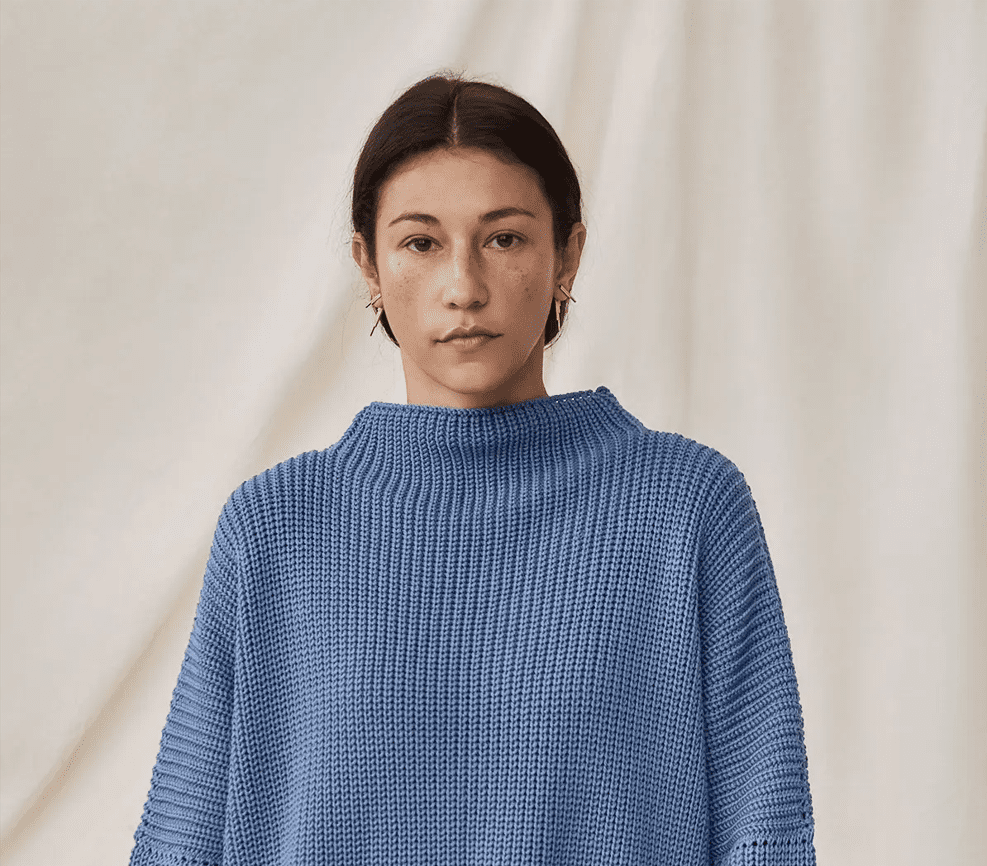
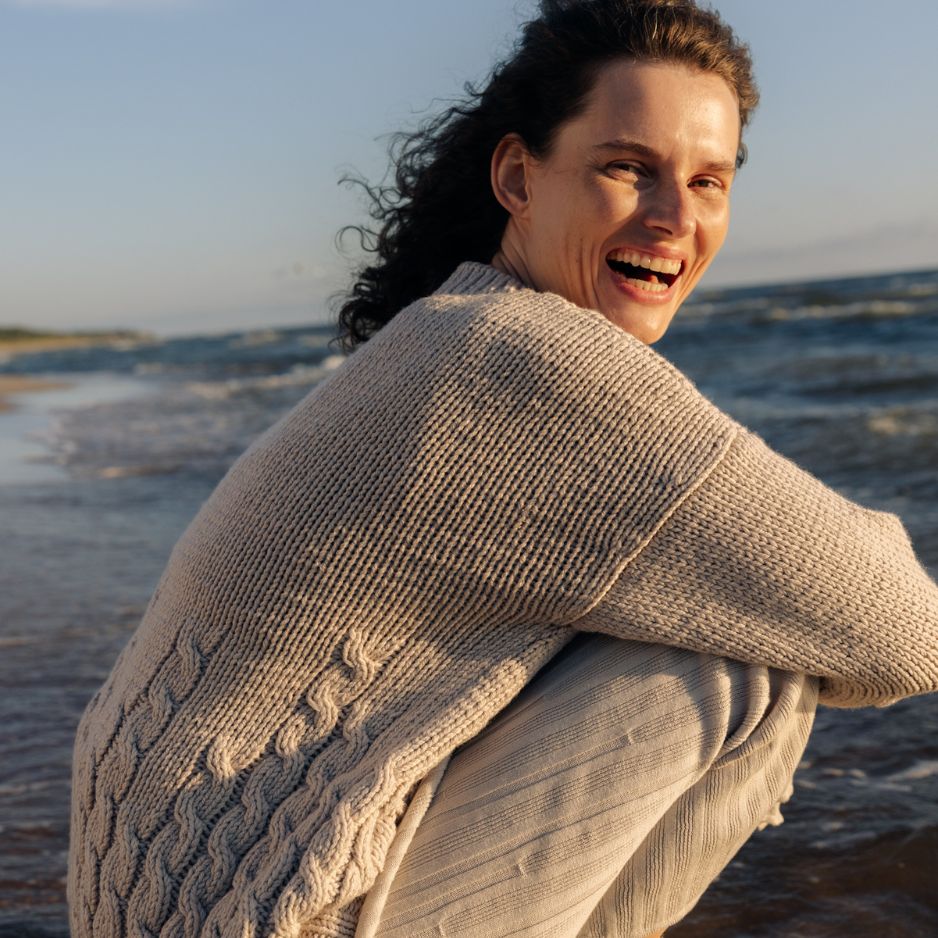
Organic green fashion, sustainable materials, slow fashion or just simply eco-friendly knitwear, there are alternatives. The fashion industry is defined by opacity and excess in many ways. The Knotty Ones is challenging this status quo. As a major sustainable knitwear brand, they have a compelling case to make about sustainable clothing and ethical principles in business.
Issues of labor exploitation, environmental degradation from synthetic materials, and a culture of waste have become impossible to ignore. It was against this backdrop that The Knotty Ones was born.
Founded by three Lithuanian best friends—Akvilė, Danutė, and Sandra—the brand emerged from a desire to counteract the “dark side of the fast fashion industry” they witnessed during their travels.
Frustrated by the disappearance of their own Baltic knitting traditions and unable to find a knit that was contemporary, sustainable, and ethically made, they decided to create it themselves.
Operating between Vilnius, Lithuania, and Brooklyn, New York, The Knotty Ones is built on a foundation of transparency, heritage, and a mission to empower the women who make our clothes.
Explore the brand’s story and discover their timeless pieces on their website.
The Human Cost: Rebuilding an Ethical Supply Chain
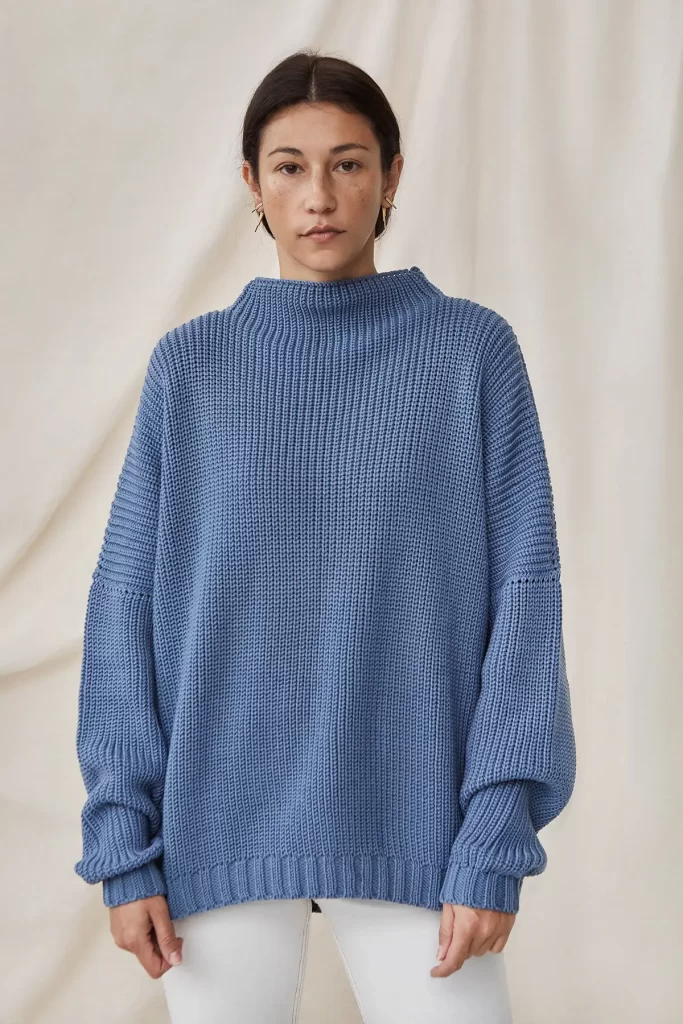
The global garment industry is notorious for its human cost. As highlighted by a sustainable closet, Bangladesh, where the fashion industry employs over 4 million garment workers, 85% are women who often work 14-16 hours a day. An estimated 85% of its workforce are women, many of whom face inhumane working conditions and earn less than a living wage.
The Knotty Ones was founded to create a system that directly opposes this reality. The brand’s core mission is to provide stable jobs, fair wages, and financial independence to women in the rural, marginalized areas of Lithuania where employment opportunities are scarce. This isn’t just a talking point; it’s a network of over 70 female artisans who are the heart of the company. We were honestly so impressed by the quality of their materials and design when it comes to eco-friendly knitwear.
It wouldn’t be possible without the amazing team behind these creations. These are women like Rūta, a licensed veterinarian with nearly 50 years of knitting experience, and Aldona, who has been with the brand since 2015 and takes summers off to tend to her garden.
The model provides flexible hours, allowing stay-at-home mothers like Ingrida—a mom to five, including two sets of twins—to work from home on their own schedules.
The brand also partners with small, female-founded Lithuanian factories that guarantee a 40-hour work week, paid leave, and safe conditions—standards rarely seen in the wider industry.
Discover the craftsmanship behind each piece in the handmade collection.
The Material Problem: A Radically Plastic-Free Philosophy
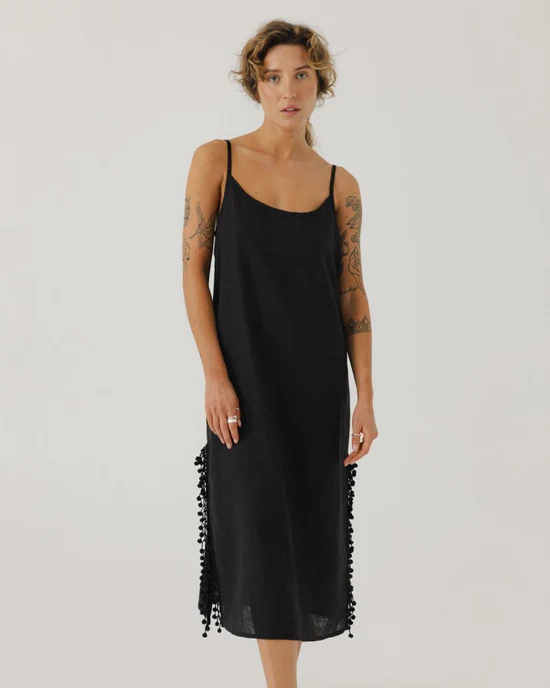
The modern textile industry is heavily reliant on synthetic fibers, which shed microplastics into our waterways and often involve harmful chemicals in their production. The Knotty Ones implements a strict “Au Naturel” mandate, using only 100% natural and biodegradable yarns to their eco-friendly knitwear.
This means every single product is completely free of plastics and the microplastics they create. This commitment extends to the smallest details. Instead of plastic, buttons are made from Corozo seeds, which are harvested only after they fall naturally from their trees in South America.
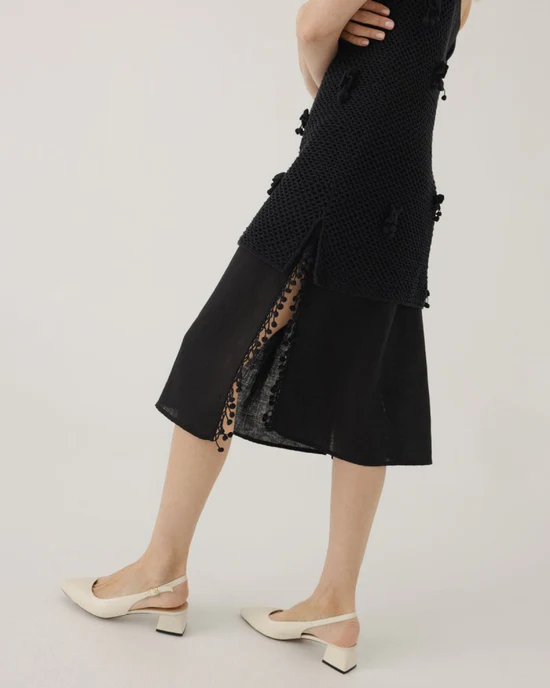
The brand’s yarns are backed by rigorous certifications, including Responsible Wool Standard (RWS) certified Merino wool from Italy, Global Organic Textile Standard (GOTS) certified wool, and OEKO-TEX® certified cotton and dyes, ensuring they are free from harmful substances.
Even the packaging is part of the solution; all mailers are made from non-toxic corn starch, designed to be reused and then fully composted at home within six months.
See how natural fibers are transformed into stunning apparel in the dresses collection.
The Waste Crisis: Designing Against Overproduction
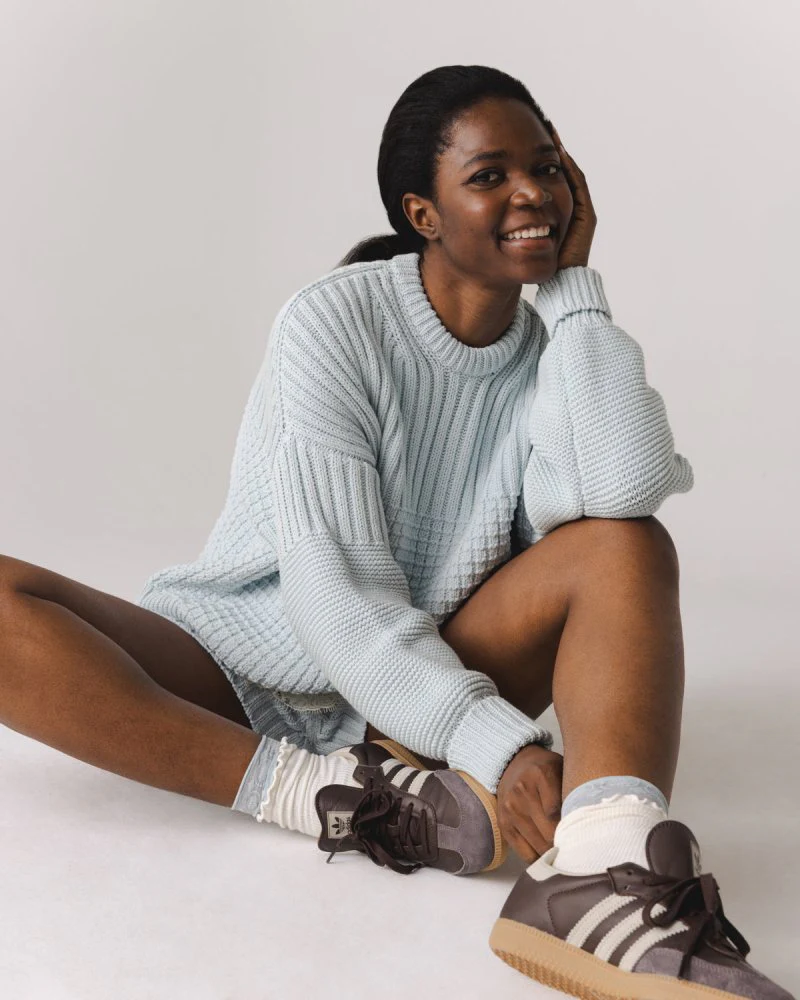
Fast fashion’s business model is built on waste. By churning out new collections every few weeks, it encourages overconsumption and generates massive amounts of “deadstock”—unsold inventory that is often landfilled or incinerated. The Knotty Ones was designed to eliminate this waste from the start.
The brand rejects the concept of seasonal collections in a fast fashion sense of thousands of pieces up for grabs, instead focusing on creating individual, timeless pieces designed to last for years. You might be surprised at how little items there actually are on their store and how few are actually available to buy.
That’s because many items are in short production. It really is slow fashion in the best way. This is the type of attention to detail in fashion we would rather see up and down the high streets.
Production is done in small batches, ensuring they “only make what we know we’ll sell” to avoid creating leftovers. Furthermore, the company utilizes a zero-waste production technique called “fully fashioned” knitting, where each part of a garment is knitted to its exact shape and then hand-sewn together.
This meticulous process eliminates the fabric scraps that are a major source of waste in conventional garment manufacturing.
Take advantage of thoughtfully produced pieces in the summer sale.
The Throwaway Culture: Engineering a Circular Ecosystem
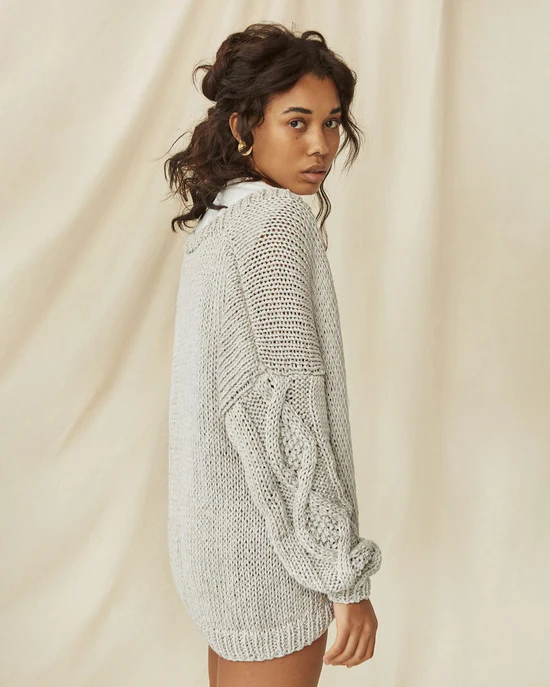
The linear “buy, wear, discard” model of fashion has a massive environmental footprint. The Knotty Ones has built a comprehensive ecosystem to ensure its garments stay in circulation for as long as possible.
Through the Knotty Atelier, a partnership with the repair service The Seam, customers can connect with vetted specialists to have their beloved knits professionally repaired or altered, extending their wearable life. For garments that are ready for a new home, the
Knotty Ones Preloved marketplace provides an official, trusted platform for customers to buy and sell secondhand pieces. To incentivize participation, sellers receive 120% of the sale value back in store credit, creating a closed-loop system that encourages reinvestment in the brand.
Finally, for styles that are being discontinued, the brand runs a profit-sharing outlet, where 100% of the profits from these final sales go directly back to the knitters who made the items, ensuring the artisans benefit even at the end of a product’s lifecycle.
Give your knits a second life on the official preloved marketplace.
The Power of Connection: From Anonymous Labor to Human Stories
In the fast-fashion machine, the person who made your clothes is an anonymous, invisible part of a global supply chain. On a sidenote, maybe take a look at this incredible episode of Monk that covers the topic. The Knotty Ones actively works to close that distance. Instead of a simple “Made in Lithuania” tag, a garment might read, “Made by Judita, who has five kids and loves Turkish soap operas”.
This simple act of recognition is central to the brand’s ethos. This connection is deepened through the Knitter’s Dream Fund, an initiative that allows customers to add a small, optional donation at checkout that goes directly toward a personal dream of one of the knitters.
This program helps fund goals that a living wage might not cover, from driving lessons for Marina to help her gain independence in her rural village to dental work for Regina or a new TV for Valentina.
This initiative, which one in four customers contributes to, has gained significant attention and was highlighted when actress Nicola Peltz Beckham wore the brand’s signature Barbora knit for a feature in Cosmopolitan UK.
Read more about Nicola Peltz Beckham’s feature and the brand’s growing recognition here.
A Tangible Alternative
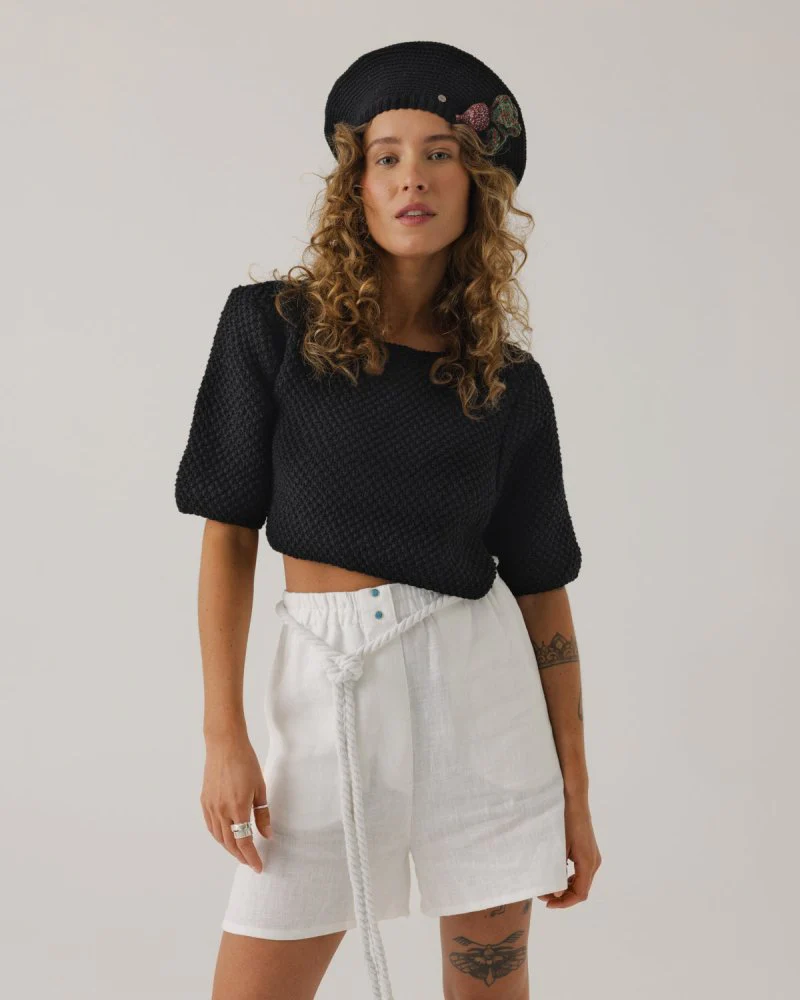
The Knotty Ones offer a clear, factual, and functioning alternative to the deeply flawed systems of the mainstream fashion and textile industries.
By prioritizing human dignity, material purity, and a circular lifecycle for its products, the brand demonstrates that ethical principles and commercial success are not mutually exclusive.
This commitment is tangible not only in their online presence but also in their physical showroom in Vilnius, Lithuania, where customers can experience the quality and story behind the garments firsthand.
It is a model that replaces anonymity with connection, longevity, and exploitation with empowerment.
If you find yourself in Lithuania, you can visit the Vilnius showroom.
Find Sustainable Skate shoes Made in Europe.
Check out this sustainable European Fashion brand creating amazing travel bags.