A collection of iconic musical moments from the French New Wave (La Nouvelle Vague) cinema! The sounds of this revolutionary era of filmmaking, with tracks featured in some of its most celebrated films.
The sounds of this revolutionary era of filmmaking, with tracks featured in some of its most celebrated films. Original Tracklist (Some have been removed due to YT). Sit back and enjoy our French New Wave Mix.
Why we chose La Chinoise as the cover art.
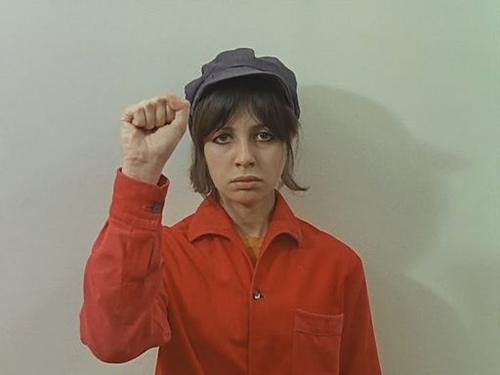
Well La Chinoise (1967) by Jean-Luc Godard is a politically charged film. We are living in such a time. The film offers a sharp, ironic look at young leftist intellectuals in France just before the events of May 1968. The film follows a group of university students, led by a character played by Anne Wiazemsky, as they immerse themselves in Maoist ideology and try to apply revolutionary theory to their bourgeois Parisian lives.
The political point Godard seems to be making is critiques of the superficial. Of the performative nature of radical politics. Of the privileged youth. While the characters are passionate about revolution and quote Mao endlessly, they are portrayed as naive. Disconnected from real working-class struggles and ultimately trapped in their own contradictions. It’s both a satire of armchair revolutionaries and a reflection on the difficulty of translating radical ideas into real political action.
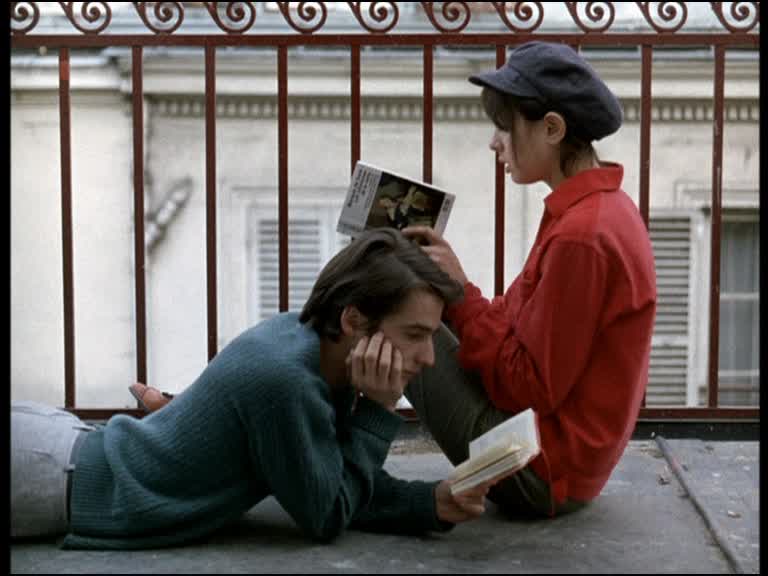
At the same time, La Chinoise captures something. Be it the cultural and aesthetic dimensions of the French Maoist moment with graphic clarity or the humour of all the waiting and reading backdropped against news of Vietnam.
And a French New Wave Mix Continues.
Through fragmented, theatrical scenes and punchy ideological monologues, Godard shows how a generation of Parisian students from elite backgrounds identified with China’s Cultural Revolution and aestheticized their revolt. This point is more than relevant today in how we need to reshape our attitudes to world issues and overcome them by presenting human rights and international law as non-negotiable.
The film is visually sharp, self-aware, and at times contradictory. Godard’s blending of sincere revolutionary fervor with a New Wave sensibility will live forever in this regard. Godard documents a key prelude to May ’68 while also exposing the tensions between radical content and experimental form. All with the French Establishment absently portrayed.
Ebert’s view on the film.
Going back to film school days, it’s always worth grabbing a viewpoint from Ebert. His full writing on Godard can be found here.
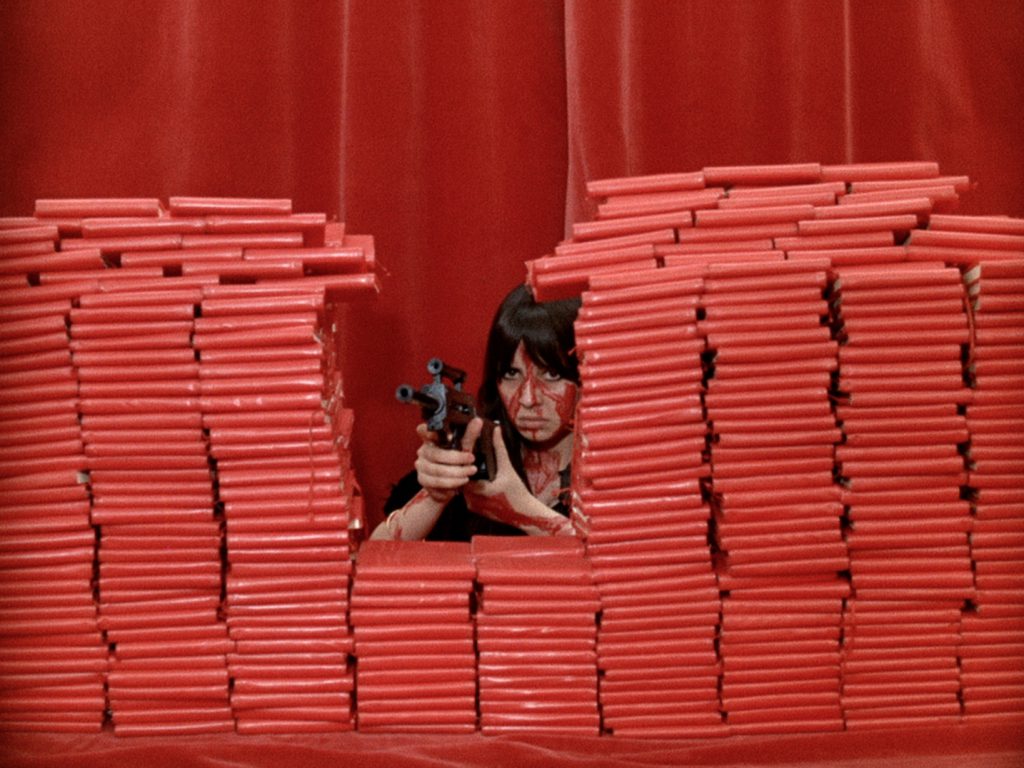
“La Chinoise” – the one of the young girl dressed in peasant’s rags and pointing a gun at the head of her friend. These young people and their lives were first introduced in “Masculine Feminine,” the film that correctly predicted the French student uprising. “La Chinoise” showed us radical students who broke loose from ideology and experimented with direct action. Now, in “Weekend,” we see young people living in guerilla tribes in the countryside, and we begin to see where Godard’s investigation is taking him.
Godard is a director of the very first rank; no other director in the 1960s has had more influence on the development of the feature-length film. Like Joyce in fiction or Beckett in theater, he is a pioneer whose present work is not acceptable to present audiences. But his influence on other directors is gradually creating and educating an audience that will, perhaps in the next generation, be able to look back at his films and see that this is where their cinema began.
French New Wave Mix Tracklist:
Our playlist tries to include some well-known french new wave songs alongside some more rare tracks. There is something so cinematic about the work of Michel Legrand, George Delerue and Antoine Duhamel. We hope to continue writing more on the type of music and musicians from the 1960s in France so be sure to follow us wherever you can for the latest updates!
Check out the full playlist here.
La mort bleue – Antoine Duhamel (from Jean-Luc Godard’s Pierrot le Fou) Poursuite (from Louis Malle’s Zazie dans le Métro or another French New Wave film) La Gai Savoir (from Jean-Luc Godard’s Le Gai Savoir) Paul (from Jean-Luc Godard’s Masculin Féminin) Vivre Sa Vie – Michel Legrand (from Agnès Varda’s Vivre Sa Vie) J’entends, j’entends – Jean Ferrat (from Chris Marker’s Le Joli Mai) Plus fort que nous – Francis Lai (from Claude Lelouch’s Un homme et une femme) Aujourd’hui c’est toi (instrumental) – Francis Lai (from Claude Lelouch’s Un homme et une femme) Un homme et une femme – Pierre Barouh & Nicole Croisille (from Claude Lelouch’s Un homme et une femme) Le bel âge Water Ski – Michel Legrand (from Eva) Les Cousins – Paul Misraki (from Claude Chabrol’s Les Cousins) Pierre et Nicole (The Soft Skin) – Georges Delerue (from François Truffaut’s La Peau Douce) Charlie et Léna – Georges Delerue (from François Truffaut’s Tirez sur le pianiste) Adultère Bourgeois – Paul Misraki (from Claude Chabrol’s À double tour) Vivre pour vivre – Francis Lai (from Claude Lelouch’s Vivre pour vivre)